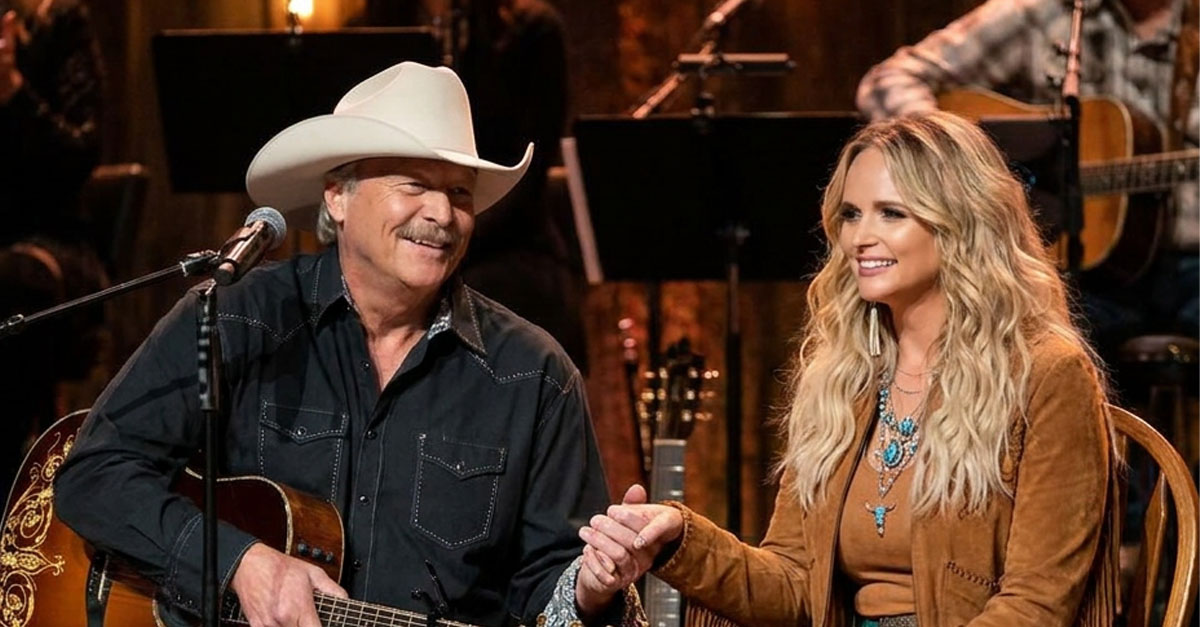
Back in 2003, Miranda Lambert was a 19-year-old Texas girl trying to win Nashville Star. She lasted nine weeks and finished third. One of the songs she sang was “Texas (When I Die).” She did not win. Two decades later, nobody has won more ACM Awards, and no woman has won more CMA Awards.
The show premiered on USA Network on March 8, 2003, country music’s cable answer to American Idol. Producers auditioned more than 800 singers and kept 12. Lambert, from Lindale, Texas, was one of them. Her parents, Rick and Beverly, were private investigators. She had already tried a department-store job and quit after two weeks. What she had instead was a voice with a Texas edge and songs she was writing herself, including “Greyhound Bound for Nowhere,” co-written with her dad.
Third place, and the judge who did not let her leave
Buddy Jewell won the first season. John Arthur Martinez finished second. Lambert placed third. On a singing competition, that is the line the recap usually ends on. It was not the line that mattered.
Judge Tracy Gershon, a Sony executive sitting beside country historian Robert K. Oermann and singer-songwriter Charlie Robison, heard something the trophy did not measure. After Lambert sang an original, Gershon said she would buy the record right then. Lambert’s answer was the whole career in four words: “Let’s make one.” Gershon helped get her signed. The show had put a 19-year-old from East Texas on national television for nine weeks. The executive in the judge’s chair made sure Nashville did not treat that as a finished story.
“Texas (When I Die),” the Tanya Tucker song she sang on the show, was a clue, not a costume. She was not auditioning to become a softer version of the format. She was already singing like someone who intended to stay Texan after the votes were counted.
Kerosene, and the chart that answered
She did not rush the record. Kerosene arrived in March 2005, about two years after the finale, and debuted at No. 1 on Billboard’s Top Country Albums chart. The title track peaked at No. 15 on country radio, which now reads like a joke. She later shared writing credit with Steve Earle after realizing the melody had brushed against “I Feel Alright.” The album still went platinum. “Me and Charlie Talking,” another song tied to that early writing, became the debut single.
The point of Kerosene was not a single peak. It was the posture. A third-place finisher had opened at the top of the country albums chart with a record that sounded like kerosene on purpose. Everything after that — Crazy Ex-Girlfriend, Revolution, Platinum, The Weight of These Wings, the Pistol Annies records with Ashley Monroe and Angaleena Presley — grew from a debut that refused to sand itself down for the format.
The record book she was not supposed to own
Today the numbers are blunt. At the 2026 ACM Awards, Lambert picked up her 39th and 40th Academy of Country Music trophies, as a writer and producer on Ella Langley’s “Choosin’ Texas,” which won Single and Song of the Year. Forty ACM Awards is the most any artist has won. She has nine straight Female Vocalist wins from 2010 to 2018, a streak that still looks untouchable, plus Entertainer of the Year in 2022.
On the CMA side she has 14 wins from 70 nominations, a total no woman in Country Music Association history has passed. Entertainer of the Year is the gap — six nominations, no win — and it is the only gap that still gets argued. The rest of the shelf is not an argument.
That is the useful part of the Nashville Star story. She did not win the show. She lasted nine weeks, sang a Tanya Tucker song like she meant the state in the title, and gave a Sony executive a reason to pick up the phone. To everyone who has been in her corner from that spring until now, the third-place finish was never the ending. It was the week Nashville found out she was not leaving.