George Strait is one of the most successful country music stars in history, and one who has remained steadfastly committed to a traditional style. Yet it is hard to believe that he has appeared on the prestigious Grand Ole Opry stage only once in his entire career.
The future country superstar made his Opry debut on October 9, 1982, and to this day he has never returned to perform as a solo artist. Opry historian Byron Fay confirmed the details to Saving Country Music. Strait appeared during the 8:30 p.m. slot of the early show on October 9, then returned at 11:00 p.m. for the late show. He was promoting his sophomore album, Strait From the Heart, which had already given him a No. 1 with “Fool Hearted Memory.” “Marina del Rey” came out a week later. No recording of the night is known to exist. The official Opry artist page for Strait is nearly blank. There is not even a bio for the man often called the King of Country.
One night, then silence
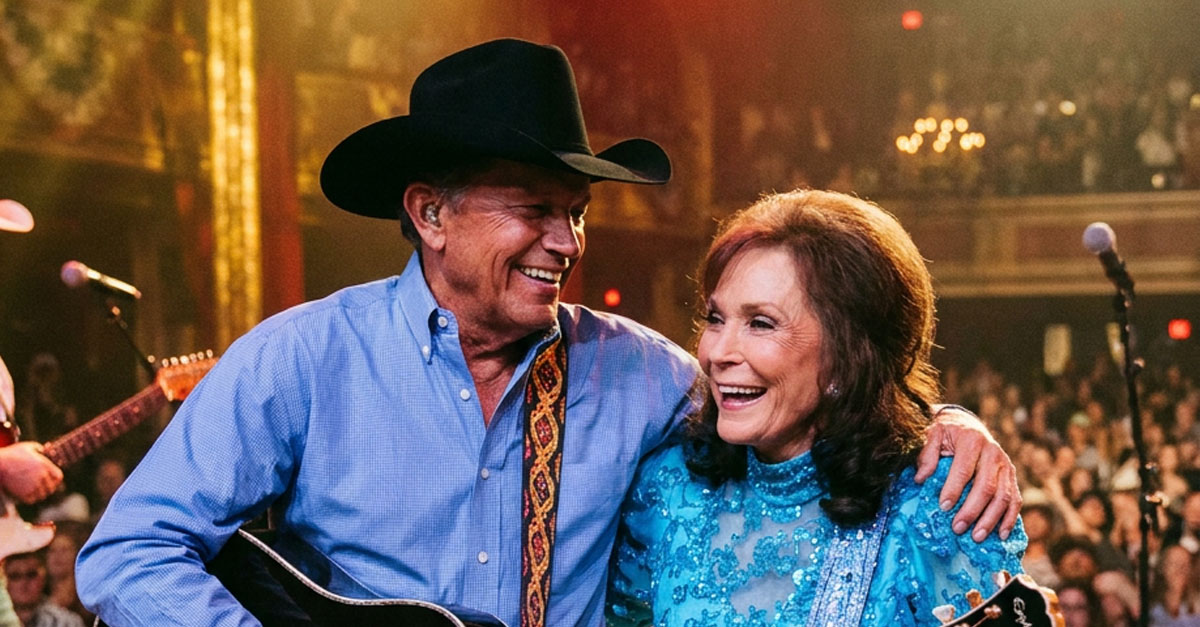
Aside from his appearance at Loretta Lynn’s memorial service at the Opry House, Strait has never come back. There is no public evidence of bad blood. The Opry has said the logistics simply did not favor a long relationship. That is the part that surprises people who assume every traditional country star treats the Opry circle as a required stop. Strait built a career of more than 60 No. 1 hits, sold-out stadiums, and a sound that never chased the pop edge of the format, and he did it without becoming an Opry member or making the stage a habit.
In 1982 he was still new. “Unwound” had put him on the map. The cowboy from Texas was not yet the King. The crowd that night did not know they were watching the artist who would later define neotraditional country for a generation. They got two sets. Country music got one Opry appearance that still stands as the only solo one.
Why we think he never returned
The short answer is Texas. Strait has lived in the Lone Star State for his entire career. He has never been known for spending much time in Nashville. The Grand Ole Opry asks its members for a real commitment, traditionally a set number of appearances or credits each year so the show can keep its regular cast in the building. Estimates have put that around a dozen performances a year. It is not always strictly enforced, but the expectation is clear: if you join, you show up in Nashville on a regular basis.
That requirement does not fit a man who kept his home, his ranch life, and his identity in Texas and treated Music City as a place for business when he had to be there. Accepting membership would have meant being in Nashville far more often than he wanted. Even without membership, returning as a guest would have meant building Opry dates into a schedule he has always preferred to keep elsewhere. Willie Nelson faced a version of the same problem. He was an Opry member in the late 1960s and gave it up when he moved back to Texas in the early 1970s, because Friday in Texas and Saturday in Nashville did not work. Strait never took the membership in the first place.
He has bucked the system in other quiet ways too. He almost never gives interviews. He has not courted radio the way most artists are expected to, even while stacking decades of hits. Staying out of the Opry rotation fits the same pattern. He did not need the stage to prove he was traditional. The records did that.
The career that did not need the circle
The absence is still striking. The Opry is the most famous stage in country music, and the artist most associated with keeping the music traditional walked onto it once, in 1982, and left it alone. No feud. No statement. Just a Texan who decided the commitment did not match the life he wanted, and a career that proved you can be the King of Country without hanging your hat in Nashville or returning to the circle. The one night remains the whole story, and the reason it stayed one night is the same reason the rest of the career worked: George Strait stayed in Texas.