For Ferryn and Brinkley Wright, performing was never just a far-off dream. It started at home in East Tennessee, where their father built them a small stage and set up a karaoke machine and microphone. The sisters took turns singing, imagining what it might be like to perform for a much bigger audience.
Years later, those childhood performances helped lead them to jobs at Dollywood—and to moments they’ll remember for the rest of their lives. Ferryn, 20, sang onstage with Dolly Parton before Parton’s death, while her younger sister, Brinkley, 17, walked beside her in the Dollywood parade.
A Dream Built at Home
Brinkley has said the sisters grew up playing “The Voice” at home. Their setup was simple: a stage their father made, a karaoke machine, and a microphone. But it gave the girls a place to practice, experiment, and imagine themselves as performers.
That early encouragement mattered. Before the Dollywood jobs and larger stages, the sisters built their experience by singing wherever someone in East Tennessee would give them a chance. Playing local venues helped them learn how to perform for different audiences and turn a shared childhood interest into steady work.
“When Will I Be Loved” Wins Over the Coaches
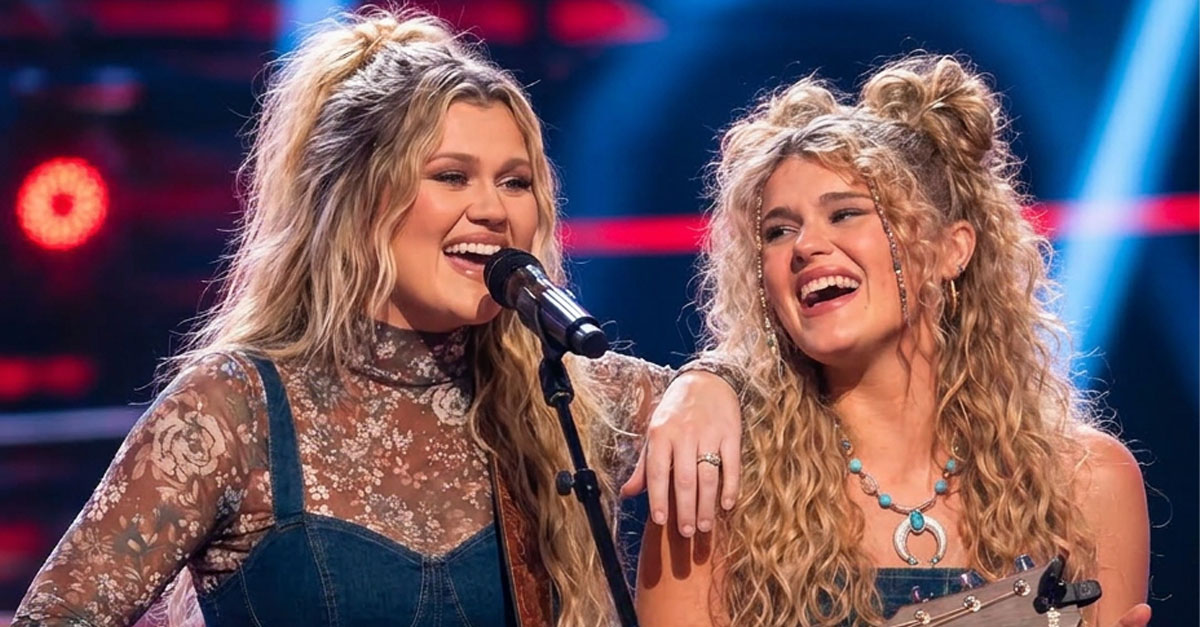
One of the sisters’ major public milestones came when they performed “When Will I Be Loved” on The Voice. The song was written by Phil Everly and became especially well known through Linda Ronstadt’s recording.
Their performance made an immediate impression: all four coaches turned their chairs. In the format of The Voice, a chair turn means a coach has chosen to recruit a singer for their team based on the blind-audition performance. A four-chair turn is a strong sign that the artist has captured the attention of the entire coaching panel.
The song’s history also made it a fitting choice. “When Will I Be Loved” has endured across generations, connecting the Everly Brothers’ songwriting with Ronstadt’s celebrated interpretation—and, in the Wright sisters’ hands, a new performance by two young East Tennessee singers.
Finding a Place at Dollywood
Today, both sisters work full-time at Dollywood. Their path there reflects the practical side of building a career in entertainment: regular performances, local opportunities, and the willingness to keep showing up and developing as artists.
Dollywood is more than a workplace for the sisters. It is also a place closely associated with Dolly Parton, whose music and personality have shaped the park’s identity. For performers who grew up in the region, working there can mean being part of a community where music, hospitality, and Appalachian culture meet.
Ferryn’s opportunity to sing onstage with Parton was especially meaningful. Brinkley had her own memorable connection to the park, walking beside her sister in the Dollywood parade. Though the experiences were different, both placed the young women in the middle of a setting that had been part of their family’s story and professional journey.
A Legacy That Resonates in East Tennessee
Dolly Parton’s influence reaches well beyond her songs. Through Dollywood, charitable work, and her public embrace of her Appalachian roots, she has helped bring attention to East Tennessee while creating opportunities for people who live and work there.
Ferryn summed up the local sense of loss by saying, “East Tennessee will never be the same without Dolly.” Her words speak to a connection that is both personal and regional: Parton was an international star, but she remained closely identified with the place she called home.
For the Wright sisters, that connection is woven into their own lives. They grew up singing in a homemade setup, gained experience performing around East Tennessee, appeared together on The Voice, and found full-time work at Dollywood. Ferryn’s moment onstage with Parton and Brinkley’s place in the parade became part of that larger journey.
From Local Gigs to Lasting Memories
The Wright sisters’ story shows how a dream can take shape gradually. A stage built at home became a place to practice. Local performances became experience. A song that connects generations helped introduce them to a national television audience. And work at Dollywood brought them into the orbit of an artist whose legacy is deeply rooted in their region.
Their journey is also a reminder that meaningful opportunities often begin close to home. For Ferryn and Brinkley, the road from a karaoke microphone to Dollywood started with family support, a love of singing, and the willingness to perform wherever they could.