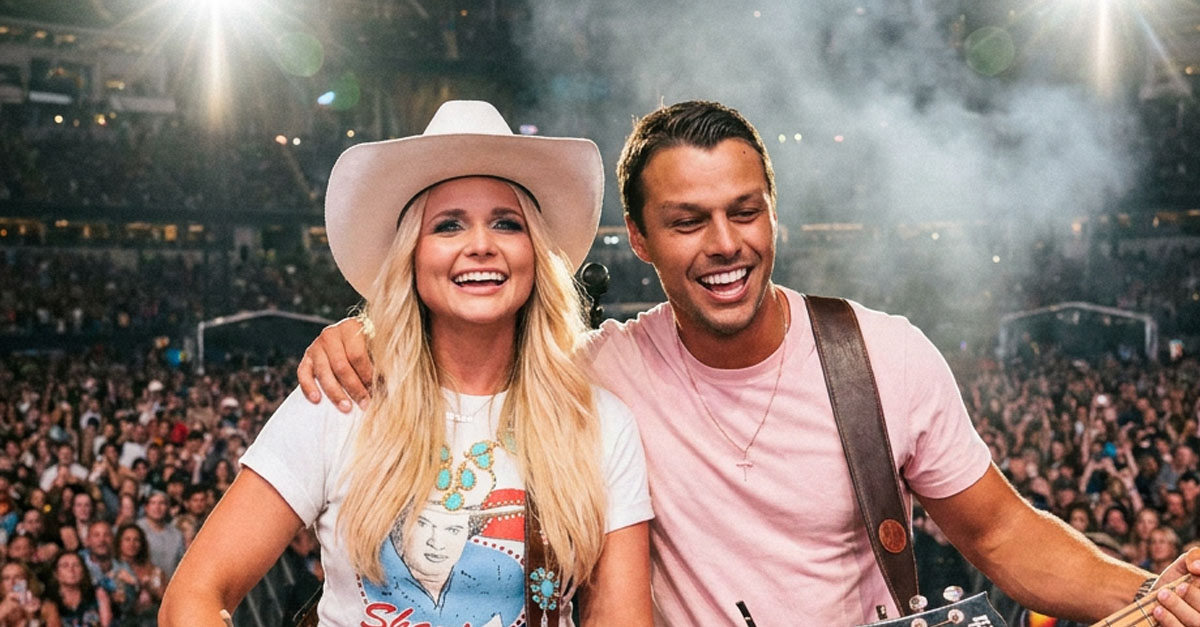
Brendan McLoughlin’s songwriting story began with a confession: he told his wife, country star Miranda Lambert, that he did not know how to write songs.
The conversation took place during the pandemic, when many people were stuck at home. Lambert kept suggesting they try writing together. McLoughlin was hesitant, but the idea eventually took hold. His first songwriting credit arrived in 2024, and he has since expanded his work with a group of songs connected to Lambert’s Postcards from Texas era.
For McLoughlin, a former New York City police officer, the shift from law enforcement to songwriting is an unusual career turn. It also offers a glimpse into how creative partnerships can develop: not necessarily through formal training, but through curiosity, persistence, and the willingness to try something unfamiliar.
A pandemic suggestion becomes a creative experiment
When Lambert encouraged McLoughlin to write songs, he initially did not see himself as a songwriter. That hesitation is familiar to many people who enjoy music but have never tried to create it. Songwriting can seem like a specialized craft—one that requires years of experience, musical theory, or a naturally poetic voice.
But co-writing often begins with conversation. Writers share ideas, memories, phrases, and perspectives, then work together to shape them into a song. Lambert’s repeated invitations gave McLoughlin a chance to take part without needing to arrive as an expert.
The pandemic period also changed how many artists worked. With touring and in-person schedules disrupted, people spent more time at home and found new ways to collaborate. For the couple, writing together became one of those ways to use the unusual circumstances creatively.
His first credit: “Dammit Randy”
McLoughlin’s first songwriting credit came with “Dammit Randy” in 2024. Lambert later recalled that he became misty-eyed when she recorded the song—and then could not stop talking about it.
That reaction says something about what a first credit can mean. A song is not just an idea on a page once it is recorded and released; it becomes a finished piece of work that other people can hear. For a new writer, hearing a song they helped create performed by an established artist can make the achievement feel tangible.
The moment also underscores the difference between private experimentation and professional songwriting. A person might casually contribute a line or story during a writing session. Receiving a formal credit means the contribution became part of a song recognized in the music industry.
From one song to a Napa writing session
McLoughlin’s next step was not simply to repeat his first experience. He says he crashed a songwriting session in Napa and came away with five songs. Alongside “Snakeskin Boots,” he helped write “Cowgirl Curtsy,” “Two Things Can Be True,” “Till the Going’s Gone,” and “Right Where We Left It.”
The word “crashed” makes the story sound spontaneous, but the result points to a more substantial creative contribution. Five songs represent a significant stretch of work, especially for someone who had only recently begun receiving songwriting credits.
A writing session can involve several people bringing different strengths to the same room. One writer may have a title, another a melody, and another a personal detail that gives the song its emotional center. The finished result is typically shaped through discussion and revision. McLoughlin’s growing list of credits suggests that he has found a way to contribute to that collaborative process.
What a songwriting credit involves
Songwriting credits identify the people credited with writing a song. In collaborative music, those credits matter both creatively and professionally: they recognize contributors and are connected to the way songwriting royalties are allocated.
A credit does not necessarily mean that one person wrote a complete song alone. Country music has a long tradition of co-writing, and a song may develop through a group’s combined ideas. Contributors can help with lyrics, a central concept, a memorable phrase, or the structure that connects a song’s parts.
For new writers, credits can also mark a learning curve. The path from joining a session to contributing to several completed songs is often built on listening, experimenting, and learning how to turn an initial thought into a usable musical idea.
A second career after the NYPD
Before becoming part of Lambert’s songwriting world, McLoughlin worked as an officer with the New York City Police Department. That background makes his move into country songwriting especially striking: the jobs call for very different daily routines and skill sets.
Still, a career change does not require a person to discard everything they learned before. Work in law enforcement can involve communication, observation, and attention to human behavior—qualities that may also prove useful in writing songs about people and their experiences. That does not mean his police work directly shaped any particular lyric, but it helps explain why a new creative pursuit can draw on abilities developed elsewhere.
McLoughlin’s story is also a reminder that people may discover creative interests later than expected. A first attempt does not have to be perfectly confident or professionally polished. Sometimes it starts with a partner’s suggestion and the admission, “I don’t know how to do that.”
A creative partnership—and a career taking shape
Writing with a spouse who is already a major recording artist brings unusual opportunities, but it also places the work in a professional context. The songs still need to stand on their own, and writing credits are earned through contributions to the material rather than through the relationship itself.
Lambert’s encouragement appears to have helped McLoughlin get through the initial uncertainty. From there, his participation in a Napa session produced multiple songs, suggesting that the experience has developed beyond a one-time experiment. His credits do not make him a country star overnight, but they do show a new creative chapter taking shape.
The value of being willing to start
Brendan McLoughlin’s journey—from saying he did not know how to write songs to contributing to five songs after a Napa session—is an unexpected second act for a former NYPD officer. His first credit, “Dammit Randy,” made the experience real; the later group of songs showed that it could continue.
The broader lesson is simple: creative work often begins before someone feels qualified to do it. A suggestion, a shared writing session, and a willingness to participate can open the door. McLoughlin’s story is a reminder that a new career does not always start with a grand plan. Sometimes it starts at home, with someone saying, “Let’s write songs.”