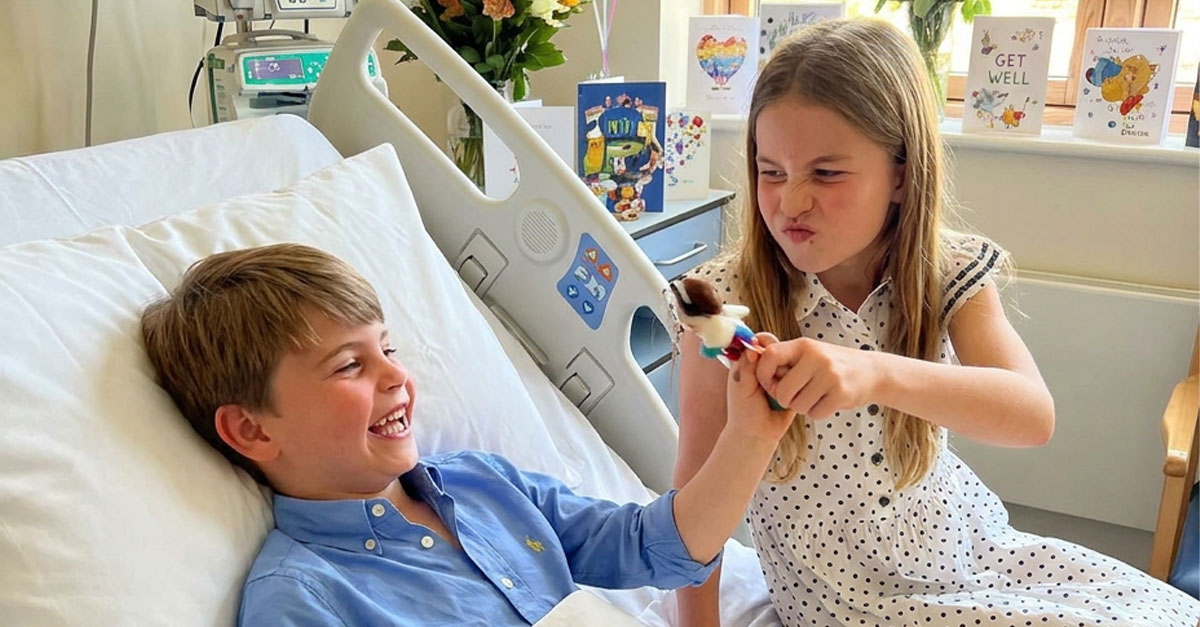
A comforting word from a sibling can matter enormously when a child is hurt. The story suggested by the headline—Princess Charlotte reassuring an injured Prince Louis with the words, “You’ll be able to run again”—is certainly moving. But there is an important distinction between an appealing royal tale and a verified account: there is no reliable public evidence that this specific injury, bedside visit, or four-word promise occurred.
That caveat does not make the underlying subject any less meaningful. Children recovering from injuries often need reassurance, companionship, and clear information as much as they need practical care. The story offers a useful starting point for considering how families can support one another—without presenting unverified details as fact.
What is known—and what is not
Prince Louis, the youngest child of the Prince and Princess of Wales, is frequently seen at public events. Princess Charlotte is his older sister. Beyond what the family or credible reporting has made public, however, details of their private lives are not generally available.
The headline’s account of Louis breaking a leg and Charlotte staying at his bedside should therefore be treated as unverified. No dependable public confirmation is provided for the claimed accident, the recovery, or Charlotte’s quoted words. A vivid quotation can make a story feel authentic, but quotation marks alone do not establish that someone said it.
This is a useful reminder for readers: when a story concerns a public figure’s health or family life, look for confirmation from a reliable source, such as an official statement or reputable news organization. If no source is identified, avoid repeating the claim as fact.
Why reassurance matters during recovery
For a child, an injury can be unsettling even when it is not medically serious. Pain, limited movement, time away from school or play, and uncertainty about what happens next can all be difficult. A child may worry about missing friends, falling behind, or whether they will return to favorite activities.
Caregivers can help by offering reassurance that is both warm and realistic. Rather than promising a specific outcome or timeline, they can explain what clinicians have said, acknowledge the child’s feelings, and focus on the next step. For example: “The doctor is helping your leg heal. Let’s ask what activities are safe now, and we’ll take it one day at a time.”
That approach avoids false certainty while still giving a child something steady to hold on to.
How siblings can offer meaningful support
Siblings do not need to act as nurses or counselors to make a difference. Simple, age-appropriate gestures can help an injured child feel included and less alone:
- Spend time together: Read, draw, play a quiet game, or share a favorite show.
- Keep the child included: Invite them into family conversations and activities that can be adapted for their recovery.
- Offer practical help: Bring a book, help choose music, or pass along a message to friends.
- Respect boundaries: A child who is tired or in pain may want quiet rather than company.
- Let adults manage medical care: Siblings can be supportive, but responsibility for treatment and safety belongs to caregivers and health professionals.
These actions work because they communicate connection—not because a sibling must say exactly the right thing.
Helping children understand an injury
Clear, age-appropriate explanations can reduce fear. Adults can describe what is known, explain what remains uncertain, and invite questions. If a child asks when they can run or play sports again, the best answer is the one grounded in professional medical advice. Recovery varies according to the injury, the child, and the treatment plan.
Families should follow guidance from the child’s healthcare team, including instructions about movement, pain relief, follow-up appointments, and warning signs that need attention. A sibling’s encouragement can complement that care, but it cannot replace medical advice.
It is also helpful to make room for mixed emotions. A child may be grateful for support and still feel frustrated, bored, or worried. Listening without dismissing those feelings can be more reassuring than insisting that everything is fine.
The larger lesson behind a touching story
Stories about close sibling relationships resonate because they reflect something many families recognize: affection often shows up in small, ordinary ways. A hand held, a shared book, or a few minutes of company can brighten a difficult day.
The royal setting may attract attention, but the lesson is universal. Children recovering from an injury benefit from dependable care, honest reassurance, and a sense that they remain part of family life. And siblings, when supported by adults and given appropriate expectations, can be a valuable source of comfort.
The reported four-word whisper from Princess Charlotte to Prince Louis makes for a heartwarming headline, but the specific incident has not been reliably verified. It should not be presented as an established event. Still, the idea at its center is worth holding on to: kindness and companionship can help a child feel less alone while recovering.
The most helpful reassurance is compassionate and truthful—paired with proper medical guidance and the patience to let recovery take its course.