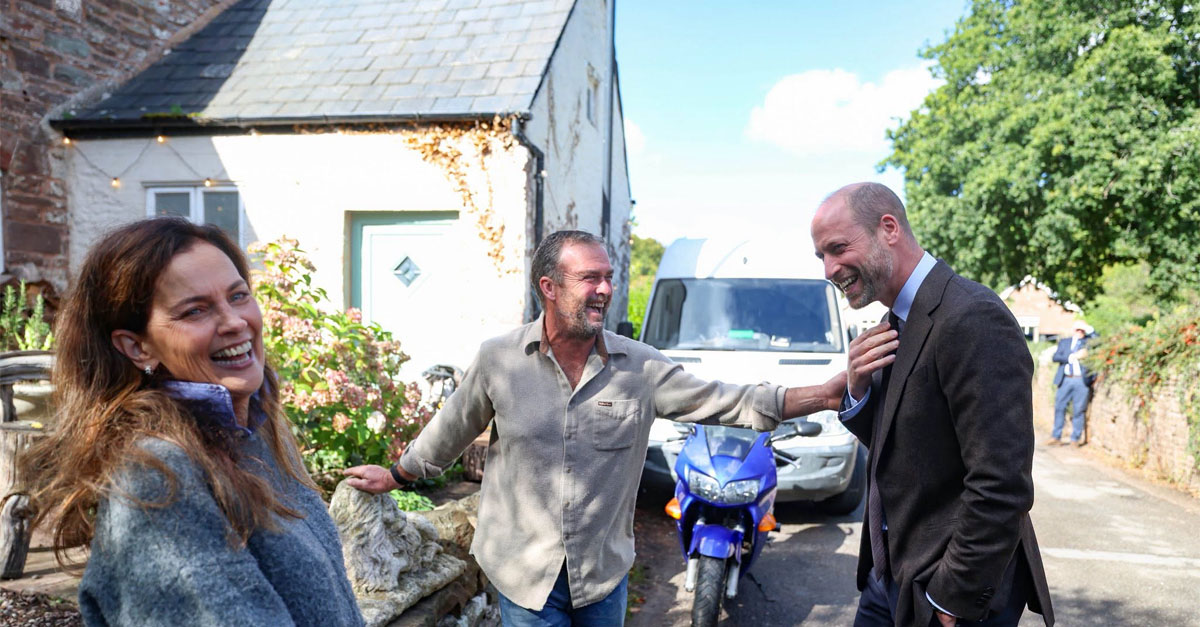
On 1 October 2026 the Prince of Wales stood in the Monmouthshire village of Skenfrith talking about flood defences when the conversation took an unexpected turn into his own childhood. Local residents Rod and Helen Wyatt had endured four major floods in six years. As they spoke with William, Mr Wyatt suddenly recalled a much earlier meeting. Holding his hand at waist height, he said, “First time I met you, you were this high. In Glanusk Estate—you sold me a CD from a bric-a-brac stall.”
William recognised the moment at once and laughed. “Dodgy car boot sale, yes I remember that,” he replied. The exchange quickly became lighter. When Mr Wyatt asked if he was still in the business, the future king answered, “No, I don’t sell… it’s dried up a bit that one, perhaps I should reopen it.” Helen Wyatt admitted they could no longer remember the title of the disc. William’s response was simple and amused: “I got up to a lot… we had some fun round there.” Reports of the visit described the three of them sharing the memory with open laughter.
The Glanusk Estate near Crickhowell is the family home of William’s former nanny, Tiggy Legge-Bourke (now Alexandra Pettifer). She looked after William and his brother Harry for much of the 1990s, and the estate was a regular backdrop to their childhood. It is also the long-standing venue for the Green Man Festival. Selling CDs from a bric-a-brac stall at a local country fair or car-boot event was one of the ordinary teenage jobs William later described as “quirky.” The memory sits comfortably alongside other glimpses of a relatively normal upbringing spent partly in Wales.
The Skenfrith visit itself was practical. William had come to inspect flood defences and hear from residents about the increasing frequency of extreme weather. He spoke with farmers, volunteers and local people about preparedness and nature-based solutions. The chance encounter with the Wyatts, however, gave the day its most human note. A future king who once stood behind a stall selling second-hand CDs was reminded of that earlier version of himself by someone who had actually bought one.

Such moments matter because they shrink the distance between royal duty and ordinary life. William has spoken before about wanting his own children to experience as normal a childhood as possible. The Glanusk recollection shows that he himself once spent time helping at a market stall, mixing with neighbours, and later laughing about the “dodgy” nature of the enterprise. The CD itself remains unidentified, and the exact age of the young seller is left to the waist-high gesture, yet the warmth of the story is clear.
In Skenfrith the serious business of flood resilience continued. Alongside it, a brief, shared laugh over a teenage side hustle reminded everyone present that even the Prince of Wales once had a part-time job that did not quite go according to plan—and that he is still happy to joke about it. The stall may have dried up, but the memory, it seems, has not.