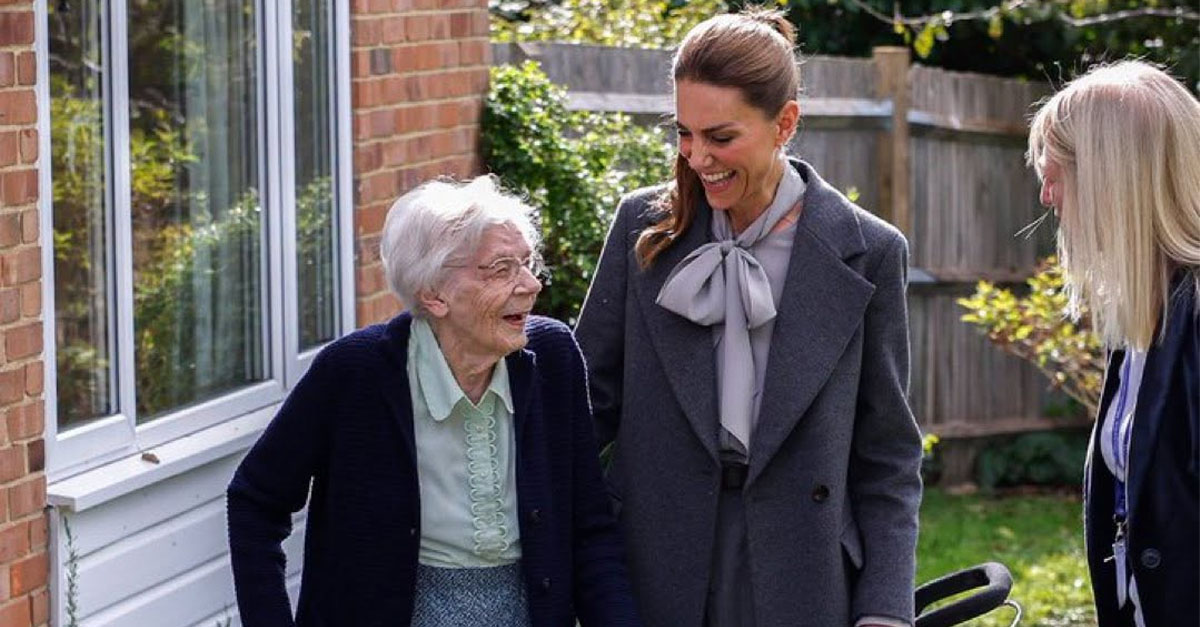
On a quiet Wednesday morning in Pulborough, the Princess of Wales did something that looked almost ordinary and felt quietly extraordinary. Catherine boarded a community minibus, walked up a garden path, and helped 94-year-old Stella Drewett from her front door onto the vehicle that takes her to a weekly lunch club. No red carpet. No formal receiving line. Just a “Good morning,” a steadying hand, and a seat among neighbours on their way to Pulborough Village Hall.
The visit, on 30 September 2026, marked the 50th anniversary of West Sussex Minibus, a volunteer-led service that has spent half a century doing the unglamorous work of keeping rural life connected. For anyone searching for the Princess of Wales Pulborough visit, the images tell the story in one frame: Catherine beside Stella’s walking frame, then later at a table of soup, bread and conversation.
A lifeline that has run for 50 years
West Sussex Minibus began as a response to thinning rural public transport. It is still entirely volunteer-led. Today about 284 volunteers run a fleet of 11 minibuses from eight village hubs, covering roughly 60,000 miles and around 13,000 passenger journeys a year. The passengers are often people who cannot easily use ordinary buses because of isolation, mobility, or cost.
Stella Drewett, a retired school cook born and bred in Sussex, is a newer user. She relies on the minibus for her weekly shop and for Wednesday lunch at the village hall. Before the princess arrived she was unfazed. Told a celebrity was coming, she joked that she did not know any celebrities. Catherine met her at the door, walked with her along the path, and told her “Well done” as she boarded. Stella’s own verdict on the lunch club was characteristically practical: one day of not cooking.
That small line is the whole point. Community transport is not a photo opportunity. It is how someone in their nineties stays independent, keeps a routine, and still has a reason to leave the house.
What Catherine actually did
The Princess of Wales travelled on a real pick-up round, not a staged arrival. The minibus collected other elderly passengers on the way to Pulborough Village Hall, where the weekly lunch club is run with the Pulborough and District Community Care Association. Inside, Catherine sat with members rather than above them. She spoke with Lynda Jones, who told her the gathering “makes a lot of difference if you’ve lost your partner,” and with other regulars including Marian Graves and Linda Stanford. Catherine’s reply was simple: “What a lovely way to make friends.”
She also spent time with the volunteers who make the routes possible, and was heard telling them she could see how much the service means. Later conversation drifted, as village-hall talk does, to ordinary life. Catherine joked about people running after her with a forgotten handbag, reminded fellow passengers about seatbelts the way she reminds her children, and said she loves washing up, with Prince William on drying-up duty. The tone was domestic on purpose. Royal visits work when they shrink the distance, not when they perform it.
Why the gesture lands
Catherine’s public work has long circled early years, mental health and the quiet mechanics of community. The Pulborough outing fits that pattern more tightly than a gala ever could. Loneliness among older people in rural Britain is not abstract. When a partner dies, a driving licence lapses, or the bus timetable disappears, a Wednesday lunch can be the difference between a week of company and a week of silence. Lynda Jones said as much. Sarah Broadhurst, 87, called the visit special because the princess had made the effort to come to Pulborough and talk as if to old friends.
The gesture works because it is specific. Catherine did not only praise volunteers from a podium. She took the same journey the service exists to provide: door, path, step, seat, hall, table. Spotlight follows her whether she wants it or not. Used this way, it lands on 50 years of unpaid driving, scheduling and kindness that would otherwise stay invisible. Trustee Alan Jenkins put it plainly: the point was to promote what volunteers do for an older generation.

A model other communities already know
Pulborough is not unique. Across Britain, minibus charities, lunch clubs and befriending schemes hold villages together after commercial routes retreat. What West Sussex Minibus shows at 50 is that scale is possible without losing the human bit: 11 vehicles, eight hubs, thousands of journeys, and still a driver who knows the passenger’s name. Catherine’s visit does not replace funding or volunteers. It does something publicity can do well. It tells a 94-year-old passenger, and the people who fetch her every week, that the work counts.
So what should we think of Catherine’s gesture? It was small in choreography and large in signal. A princess on a minibus will not fix rural isolation. A princess who helps a 94-year-old board that minibus, then sits down for lunch and listens, can make the rest of us look twice at the services we walk past. Fifty years on, the West Sussex Minibus is still doing the collecting. For one morning in Pulborough, Catherine simply rode along, and made sure Stella got there safely.
About 3,950 characters in the body. Natural keyword placement covers Princess of Wales, Catherine, Pulborough, West Sussex Minibus, Stella Drewett, lunch club and volunteer community transport, without stuffing. Citations for the underlying reports: BBC, Sussex Express and ITV Meridian.