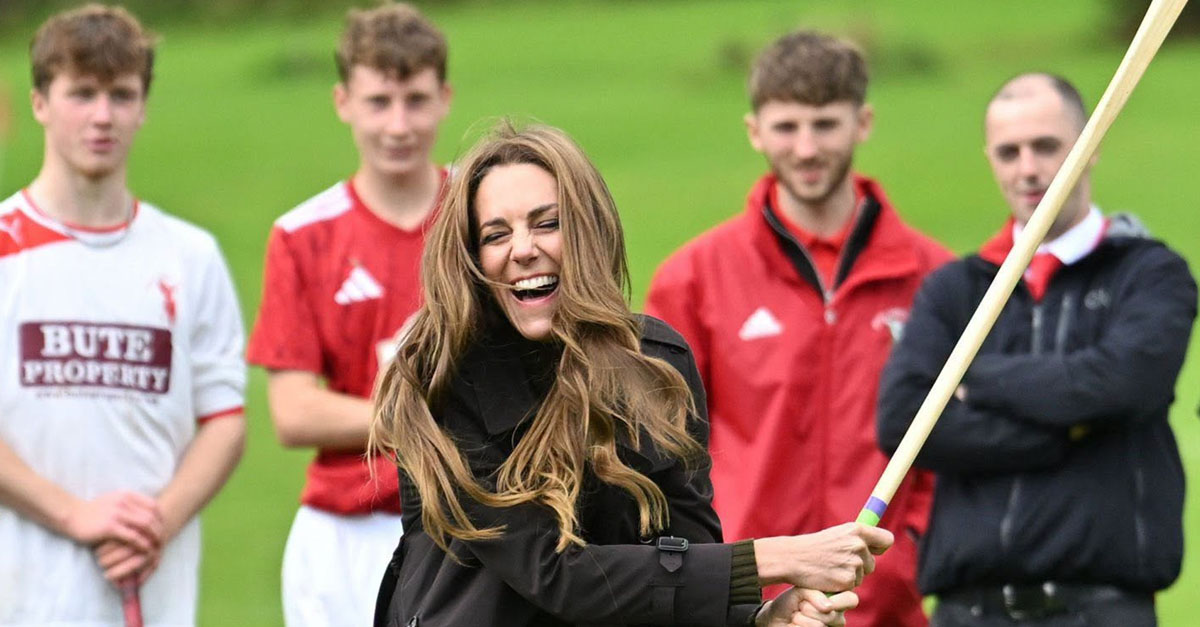
Princess Kate brought a playful touch to her visit to the Isle of Bute today, joining a shinty match at Bute Shinty Club in Rothesay. Her attempt to strike the ball produced a funny moment that delighted those watching—and offered a lively introduction to one of Scotland’s oldest team sports.
The visit put shinty, a fast-paced game with deep roots in the Highlands and Islands, in the spotlight. Here’s what makes the sport distinctive and why a royal visit to a local club can matter beyond the match itself.
A royal visit to Rothesay
Rothesay is Bute’s principal town, set on the island’s eastern coast. During her visit, Kate met people connected with the local community and took part in shinty at the club.
Trying an unfamiliar sport in front of an audience is rarely effortless. Kate’s swing at the ball led to a humorous moment, bringing a relaxed atmosphere to the event. It was a reminder that public engagements do not always need to be formal: sharing in a local activity can be an approachable way to connect with the people and traditions of a place.
What is shinty?
Shinty is a Scottish field sport played with a curved stick called a caman and a small ball. Two teams compete to score by sending the ball into the opposing goal. The game is known for its speed, physicality and skillful stickwork.
At first glance, shinty may look familiar to people who know hockey or hurling. It has its own rules and style, however, shaped by its history and the communities that have kept it alive. Players need to combine control, quick reactions and teamwork—often while moving at pace across a large playing area.
A sport with deep Scottish roots
Shinty developed from traditional stick-and-ball games played in Scotland over many centuries. It became particularly associated with the Highlands and Islands, where it grew into an organised sport and an important part of local life.
Today, clubs and governing bodies help sustain the game through leagues, competitions and youth programmes. Shinty is not only a sporting tradition; it is also a way for communities to come together, pass skills between generations and maintain a distinctive part of Scottish culture.

Why community clubs matter
Local clubs such as Bute Shinty Club provide more than a place to compete. They can offer young people opportunities to learn a sport, build confidence and form connections with teammates and coaches. For adults, clubs can create a lasting social network and a shared focus for the community.
A high-profile visit can help introduce a club—and its sport—to people who might otherwise know little about it. The attention is especially valuable for traditional sports that rely on participation, volunteers and local support. At the same time, the heart of the occasion remains the club members and community who sustain the game year-round.
A memorable moment—and a wider spotlight
Kate’s light-hearted attempt to hit the ball added a human note to the visit. It gave spectators a moment to enjoy while drawing attention to the sport itself. For readers new to shinty, that may be the most lasting effect: a glimpse of a lively game with a rich history and a strong community presence.
Princess Kate’s visit to Bute Shinty Club combined a cheerful sporting moment with a chance to celebrate a distinctly Scottish tradition. Shinty’s energetic gameplay may have provided the headline, but the deeper story is the role of local clubs in keeping the sport—and the community connections around it—alive.